
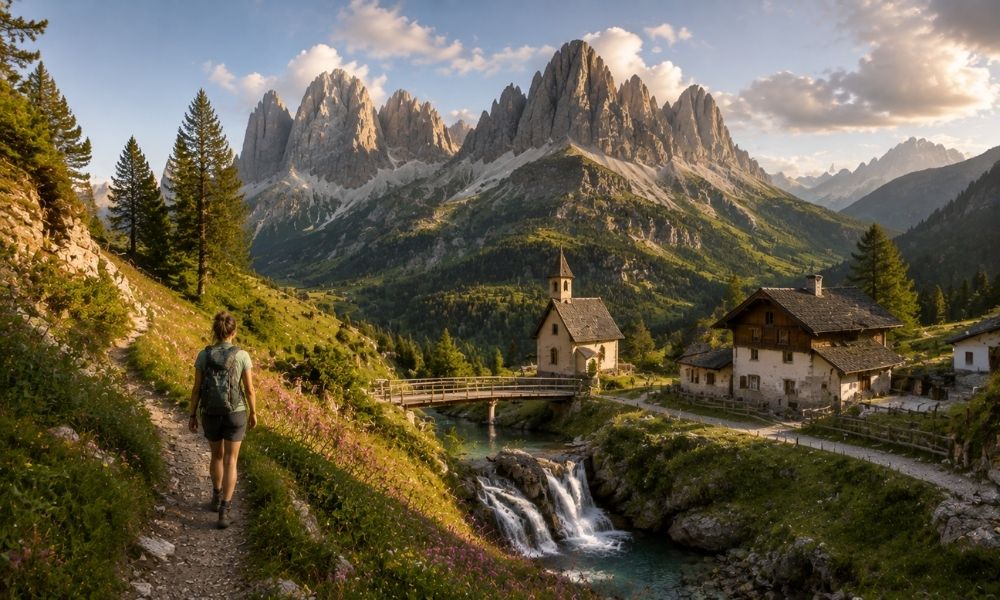
The Dolomites have a travel-planning problem: the most famous places are so spectacular that they can easily take over an entire itinerary. Lake Braies, Tre Cime di Lavaredo, Seceda, Cortina d’Ampezzo and the major mountain passes deserve their reputation, but moving from one headline attraction to the next can leave little time for the quieter landscapes in between.
That matters because some of the most rewarding Dolomites experiences happen away from the obvious photo stops. A peaceful walk through Val Fiscalina, an afternoon on the Prato Piazza plateau or a detour into Val di Zoldo can show you a side of the mountains that feels slower, more spacious and more closely connected to everyday Alpine life.
The places below are not undiscovered secrets—locals and experienced hikers know them well. They are simply corners that are easier to overlook when planning a first Dolomites trip. Add one or two to a classic itinerary and the journey immediately becomes more varied.
1. Val Fiscalina: Walk Into the Mountains Instead of Driving Past Them
Val Fiscalina, or Fischleintal, branches south from Sesto in the eastern Dolomites. Instead of beginning with a dramatic mountain pass or cable-car station, the valley gradually draws you into the landscape through meadows, conifer forests and the towering walls of the Sesto Dolomites.
The main valley floor extends for roughly 4.5 kilometres and rises only gently toward Rifugio Fondovalle at 1,548 metres. That makes Val Fiscalina particularly useful when you want serious Dolomite scenery without committing to a demanding mountain hike. From the end of the valley, stronger walkers can continue into the Three Peaks Nature Park.
Why Add Val Fiscalina to an Eastern Dolomites Day?
The contrast with Tre Cime is the real appeal. Tre Cime gives you an iconic high-mountain landmark; Val Fiscalina gives you the sensation of approaching those mountains slowly from below.
It works especially well for couples, families and mixed-ability groups because everyone can experience the valley at an appropriate pace. You can walk only as far as the scenery tempts you, stop at a mountain hut or turn the outing into the beginning of a longer hike.
If your plans already include Cortina, Misurina, Tre Cime or Lake Braies, the valley fits naturally into the eastern side of the region. Ciao Dolomites covers this broader area on its Heart of the Dolomites private route, which connects Bolzano with Cortina and several of the eastern Dolomites' best-known landscapes.
2. Prato Piazza: See the Braies Dolomites Without Stopping at the Lake
Many travellers enter the Braies Valley with one destination in mind: Lago di Braies. Continue your exploration beyond the lake, however, and Prato Piazza—Plätzwiese in German—offers a very different experience.
The plateau sits at around 2,000 metres inside Fanes-Senes-Braies Nature Park. Its open terrain creates broad views toward Croda Rossa, Picco di Vallandro, Monte Cristallo and the Tofane, with several walking routes beginning directly on the plateau.
Instead of circling a single famous viewpoint, you are surrounded by mountains in almost every direction.
Plan Around the Access Rules
Prato Piazza is deliberately protected from unrestricted vehicle traffic. Road access and traffic-control periods change with the season, while buses and shuttles provide alternatives during busier months. Because the exact arrangements can change from year to year, check the current Braies Valley access information shortly before travelling rather than relying on an old itinerary.
That small amount of planning is worthwhile. If your trip already takes you toward Lago di Braies, consider allocating a separate half-day to Prato Piazza rather than treating the entire Braies Valley as a quick photo stop.
3. The Adolf Munkel Trail: Go Beyond the Famous Val di Funes Viewpoints
Val di Funes is hardly unknown. The views of San Giovanni in Ranui and Santa Maddalena beneath the Odle peaks appear on postcards and social feeds around the world. But many visitors photograph the valley and leave without exploring the landscape behind those images.
The Adolf Munkel Trail changes the perspective completely. Starting around Zannes, the route runs beneath the steep northern faces of the Odle/Geisler group through forest, Alpine meadows and traditional mountain-hut country.
A full variation is approximately 13 kilometres and takes around four and a half hours, while a shorter loop of roughly nine kilometres returns to Zannes via the Geisler and Dusler alpine huts. Public transport can also reach Zannes, making it possible to approach the trail without relying completely on a car.
Turn a Photo Stop Into a Real Funes Valley Experience
The ideal approach is to combine both sides of Val di Funes: see the celebrated church viewpoints, but reserve additional time for the upper valley.
This is also a logical extension for travellers interested in Ciao Dolomites' Seceda and Funes Valley experience. The route already shows the Odle from two distinctive perspectives—Seceda on the Val Gardena side and Funes on the opposite side—while a separate hiking day on the Adolf Munkel Trail allows you to get much closer to the same mountain group.
4. Val di Zoldo: Stay Where Pelmo and Civetta Dominate the Horizon
Val di Zoldo is an excellent answer to travellers who like the Dolomites but do not want every day to revolve around the busiest resorts.
The valley sits between some formidable mountains, particularly Monte Pelmo and Civetta. Yet its appeal comes from more than dramatic rock walls. Traditional settlements, forests, mountain pastures and walking routes make it a destination where spending a night or two is more rewarding than simply driving through.
The local tourism network highlights everything from walks between historic hamlets to family-friendly trails and longer mountain excursions. Val di Zoldo can be reached from the south through Longarone or from neighbouring Dolomite valleys over mountain roads including Forcella Staulanza and Passo Duran.
Use Val di Zoldo as a Base, Not Just a Detour
This is one corner where slowing the itinerary down makes sense. Spend a night locally and you can combine village walks with a more ambitious hike toward Pelmo or Civetta rather than spending several hours repeatedly driving to and from a larger resort.
It also introduces a different cultural atmosphere. The Dolomites extend across several Italian provinces and linguistic areas, and Val di Zoldo gives you a stronger sense of the Belluno side of the mountains than an itinerary focused entirely on South Tyrol.
5. Mondeval: Find Archaeology in the Middle of High Dolomite Scenery
Most travellers cross Passo Giau for the view and continue toward Cortina. Hikers who leave the road behind can reach something far more unusual: the Mondeval plateau.
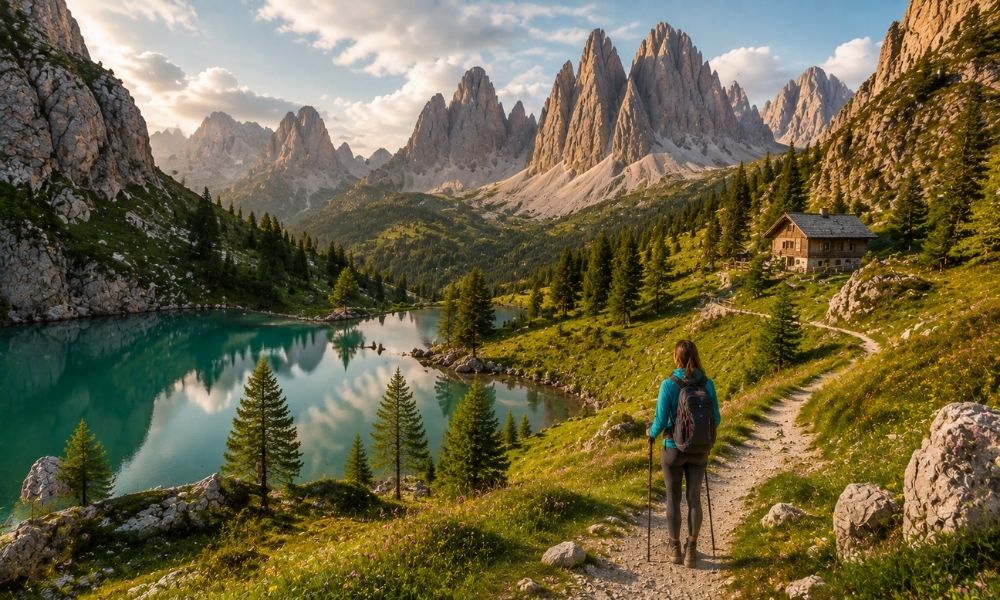
The landscape spreads between Passo Giau, Monte Pelmo and the Croda da Lago area, combining rolling high-altitude grassland with some of the most striking mountain silhouettes in the eastern Dolomites. It is also culturally significant. Mondeval contains the archaeological site associated with a Mesolithic hunter who lived around 7,500 years ago; the remains are now preserved in the museum at Selva di Cadore.
Make Mondeval a Hiking Day
One rewarding route begins at Passo Giau and crosses the Mondeval plateau before continuing toward Lago Federa and descending to Ru Curto. Cortina's official hiking information lists the route at about 12.1 kilometres and slightly over four hours, although mountain conditions, stops and individual pace can make the day longer. Because the start and finish differ, transport logistics need to be planned in advance.
This is not the place to squeeze between several sightseeing stops. Give Mondeval most of a day and bring proper hiking footwear, water and layers for changing mountain weather.
6. Lago Federa: Choose the Alpine Lake You Have to Earn
Lake Braies and Lake Carezza can be seen with relatively little walking. Lago Federa is different. Reaching it requires a hike, which changes the entire experience.
The lake lies beneath Croda da Lago near Rifugio Croda da Lago–Gianni Palmieri at just over 2,000 metres. Larches, Alpine pasture and the distinctive Becco di Mezzodì surround the water, creating a setting that feels more intimate than the Dolomites' roadside lakes.
Visit for the Journey as Much as the Lake
Several approaches are possible. You can walk from the Ru Curto area, incorporate Federa into a Croda da Lago circuit or arrive via the longer Mondeval route.
Autumn is particularly attractive because the larches around the lake change colour, but seasonal hut operations and mountain conditions always need checking before departure. Rifugio Croda da Lago generally operates during the summer and autumn hiking season rather than year-round.
If a classic Dolomites road trip from Bolzano introduces you to the passes and major panoramas, Lago Federa makes a strong follow-up on a separate hiking day around Cortina. Ciao Dolomites' longer routes already travel through the Cortina and mountain-pass area, making the lake a sensible addition for visitors extending their stay.
7. Val Canali: Discover the Quieter Southern Side of the Pale di San Martino
Travellers concentrating on Val Gardena and Cortina sometimes forget how far the Dolomites extend into Trentino. Val Canali is one of the strongest reasons to look south.
Located near Primiero in Paneveggio–Pale di San Martino Nature Park, the valley opens beneath the southern walls of the Pale di San Martino. Lake Welsperg, the meadows around Piereni, Villa Welsperg and Malga Canali create a landscape where sharp limestone peaks rise behind much softer forests and farmland.
Save Val Canali for a Slower Part of Your Trip
Val Canali is accessible throughout the year, but spring and autumn are especially appealing for travellers who prefer woodland walks, seasonal colour and lower-altitude exploration. During summer, a shuttle connection from the Primiero villages helps visitors reach the area with less dependence on private cars.
Because it lies away from the standard Bolzano–Val Gardena–Cortina circuit, Val Canali is best treated as part of an overnight stay around Primiero or San Martino di Castrozza. Trying to force it into an already busy northern Dolomites day would defeat the reason for visiting.
Which Hidden Dolomites Corner Fits Your Trip?
You do not need to visit every place on this list. Choose according to the type of experience missing from the rest of your itinerary:
- For an easy scenic walk: Val Fiscalina.
- For broad high-altitude views with minimal strenuous hiking: Prato Piazza.
- For a classic half- or full-day Dolomites hike: the Adolf Munkel Trail.
- For villages and a slower mountain base: Val di Zoldo.
- For archaeology and open high-country landscapes: Mondeval.
- For an Alpine lake reached on foot: Lago Federa.
- For a quieter Trentino extension: Val Canali.
The best choice is usually the one that complements your famous stops rather than competing with them.
How to Add Hidden Places Without Overloading Your Dolomites Itinerary
A good Dolomites itinerary needs more empty space than most first drafts include. Mountain roads are slow, weather can change quickly and an unexpected viewpoint or rifugio lunch can easily become the highlight of the day.
Keep these principles in mind:
- Group destinations geographically. Pair Val Fiscalina with the Sesto–Tre Cime area, Prato Piazza with Braies, and Mondeval or Lago Federa with Cortina and Passo Giau.
- Do not measure mountain days by kilometres alone. Short driving distances can involve passes, switchbacks and seasonal traffic.
- Check transport and access rules shortly before travelling. Protected areas increasingly use buses, shuttles and vehicle restrictions during busy periods.
- Separate sightseeing days from serious hiking days. A four-hour mountain trail should not be treated as another stop between lakes.
- Leave one day flexible. Use it for the location that has the best weather when you arrive.
The Best Dolomites Trip Is Not Just a Checklist
The famous landmarks give you the Dolomites you have seen in photographs. The quieter valleys, plateaus and trails give you a better sense of how the region actually fits together.
Val Fiscalina reveals the mountains from the valley floor. Prato Piazza opens a high-altitude panorama beyond Lake Braies. The Adolf Munkel Trail takes you behind Val di Funes' postcard views. Val di Zoldo introduces a slower side of the Belluno Dolomites, while Mondeval combines wild scenery with human history. Lago Federa rewards travellers prepared to walk for their view, and Val Canali proves that some of the region's most memorable landscapes lie well beyond the standard northern circuit.
As popular Dolomite destinations continue to require more careful parking, transport and timing decisions, building a trip around a mixture of icons and quieter places makes increasing sense. Do not abandon Tre Cime, Seceda or Lake Braies. Give them context by seeing what lies beyond them.
FAQs
What is the best hidden place in the Dolomites for non-hikers?
Val Fiscalina and Prato Piazza are two of the best choices. Both offer impressive scenery without requiring a difficult mountain hike, although access arrangements for Prato Piazza should be checked before travelling.
Which quieter Dolomites destination is best near Cortina d'Ampezzo?
Lago Federa and Mondeval are excellent choices near Cortina. Both require hiking, and they can even be connected as part of a longer route from Passo Giau toward Ru Curto.
Is Val di Funes still worth visiting if it is popular?
Yes. The church viewpoints are famous, but the upper valley and Adolf Munkel Trail provide a much deeper experience beneath the Odle peaks.
Where should I stay for a quieter Dolomites holiday?
Val di Zoldo is a strong base if you want mountain villages, hiking and views of Pelmo and Civetta without making a major resort the centre of every day.
How many hidden Dolomites destinations should I add to one trip?
For a typical multi-day itinerary, one or two is usually enough. Choose places that sit naturally beside destinations already on your route rather than adding long detours simply to cover more ground.