

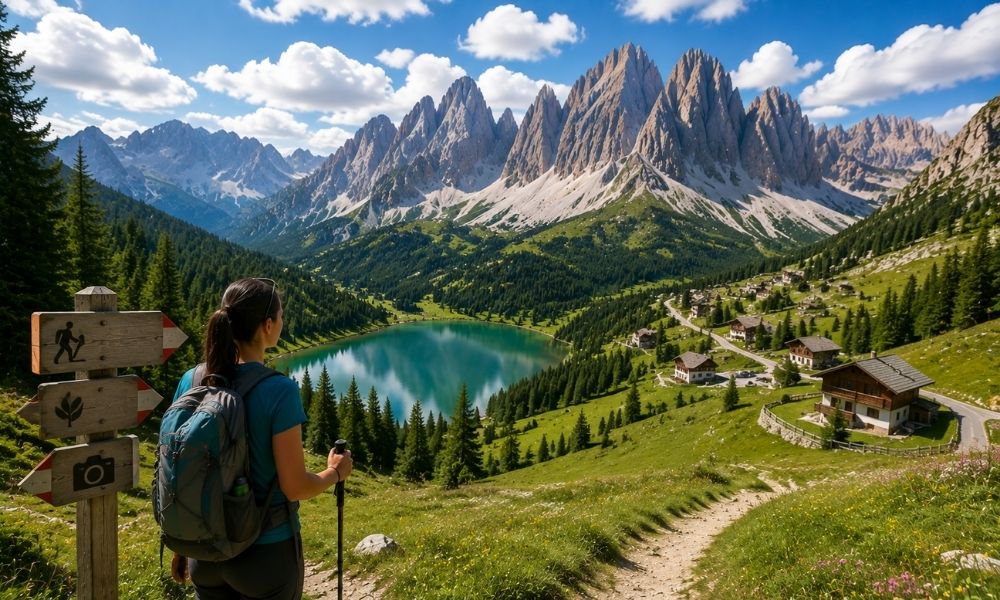
The biggest mistake first-time visitors make in the Dolomites is assuming they can plan the region like a single city or national park. They cannot. The Dolomites are a vast collection of mountain groups, valleys, passes and villages spread across northern Italy, and places that look close on a map can be separated by slow mountain roads and high passes.
That matters because a good first trip is not about fitting every famous viewpoint into the itinerary. It is about choosing the right base, grouping nearby sights together and leaving enough time to actually experience the mountains instead of spending the entire holiday behind a steering wheel.
The Dolomites have been part of the UNESCO World Heritage List since 2009, recognised for both their extraordinary landscapes and geological significance. The UNESCO area itself consists of nine separate mountain systems rather than one continuous range.
For a first visit, the simplest strategy is to understand the region in manageable sections and build your trip around two or three experiences you genuinely care about.
Start by Understanding the Western and Eastern Dolomites
You do not need to learn every valley before travelling, but understanding the rough geography will make almost every other planning decision easier.
The Western Dolomites Are Ideal for Scenic Passes and Seceda
Around Bolzano, Val Gardena and Val di Fassa, the landscape is dominated by famous mountain groups such as the Sella, Sassolungo, Odle and Catinaccio.
This is the side to prioritise if your mental image of the Dolomites includes high mountain passes, green alpine meadows, dramatic roadside viewpoints and the sharp ridge of Seceda.
One particularly effective introduction is the historic Great Dolomites Road, which runs through some of the region's most impressive western scenery. Ciao Dolomites' Great Dolomites Road tour travels from Bolzano through Lake Carezza, the Costalunga and Pordoi areas and Val Gardena, combining several landscapes that would otherwise require considerable route planning.
The Eastern Dolomites Are Home to Tre Cime and Famous Alpine Lakes
Travel east toward Cortina d'Ampezzo and Dobbiaco, and the character changes. This is where you find Tre Cime di Lavaredo, Lago di Braies, Lago di Misurina and some of the most recognisable mountain scenery in Italy.
For first-time visitors who have seen photographs of the Dolomites and want to visit the places behind them, the eastern side deserves at least one full day.
Do not make the mistake of treating western and eastern highlights as neighbouring attractions. Travelling between them can take considerably longer than the distance on a map suggests because mountain passes and winding roads dictate the route.
Choose the Best Time to Visit for What You Actually Want to Do
There is no single "best month" for the Dolomites because a hiking trip, scenic road trip and ski holiday require completely different conditions.
Summer Is the Safest Choice for a First Hiking Trip
For most first-time visitors interested in hiking, cable cars and high-altitude viewpoints, summer offers the easiest introduction.
By late June, more trails and mountain facilities are generally accessible, while July and August offer the widest range of lift operations. They are also the busiest months, particularly around Seceda, Tre Cime and Lago di Braies.
September can be especially attractive for visitors who want a quieter experience while many summer services are still operating. However, always check individual lift dates rather than assuming everything remains open until the end of autumn.
For example, Val Gardena publishes separate operating periods for each summer lift, and the 2026 Seceda service from Ortisei runs on changing schedules from late May into early November.
Shoulder Season Requires More Flexible Planning
Late spring and late autumn can be beautiful, but they are not simply cheaper versions of summer. Snow may remain at elevation in spring, while lifts, rifugi and seasonal transport can close between the main summer and winter periods.
If Seceda or another lift-dependent viewpoint is central to your trip, verify operating dates before booking accommodation.
Winter, meanwhile, should be treated as a completely different type of Dolomites holiday. Ski resorts and winter scenery become the focus, while many roads, hiking routes and summer attractions operate differently.
Decide How Many Days You Really Need
A single day can provide a memorable introduction to the Dolomites, but it should be treated as a scenic overview rather than a complete visit.
If you have one day, choose either a concentrated regional route or a professionally organised full-day tour that handles the driving and logistics. Ciao Dolomites' Best of the Dolomites in One Day tour is designed for this exact situation, travelling from Bolzano across the western Dolomites toward Cortina and returning through the eastern valleys. The route covers roughly 300 kilometres over approximately ten hours, so it is deliberately an intensive overview.
With three days, you can see the major highlights while giving each area some breathing room.
Four to five days is better if you want to combine sightseeing with proper hiking. Within a week, it becomes realistic to divide your stay between western and eastern bases rather than repeatedly crossing the mountains.
Choose Your Base Around Your Priorities
Your accommodation location has more influence on the quality of a Dolomites trip than many first-time visitors realise.
Bolzano Works Well as a Gateway
Bolzano is a practical option if the Dolomites form part of a wider Italian or European trip. It sits outside the highest mountains but provides straightforward access toward Val Gardena, Lake Carezza and the Great Dolomites Road.
It is particularly useful for travellers who do not want to change hotels frequently or who prefer joining a private day trip rather than driving mountain roads themselves.
Ortisei Is Excellent for Val Gardena and Seceda
If hiking and mountain lifts are your priorities, Ortisei is one of the most convenient western bases.
Seceda rises directly above Val Gardena, and its lift system makes dramatic high-altitude scenery accessible without requiring an all-day ascent. The summit area reaches roughly 2,520 metres and provides exceptional views toward the jagged Odle/Geisler peaks. Ciao Dolomites combines the area with Val di Funes on its Mount Seceda and Funes Valley tour, allowing visitors to see the same mountain group from contrasting sides.
Cortina Is Better for the Eastern Dolomites
Choose Cortina d'Ampezzo if Tre Cime, Misurina and the surrounding eastern peaks matter more than Val Gardena.
The advantage is not simply being close to famous sights. You also reduce the number of long pass crossings required during your trip, giving you more time for walks and mountain stops.
Dobbiaco is another practical choice farther north, particularly for Tre Cime and the Braies area.
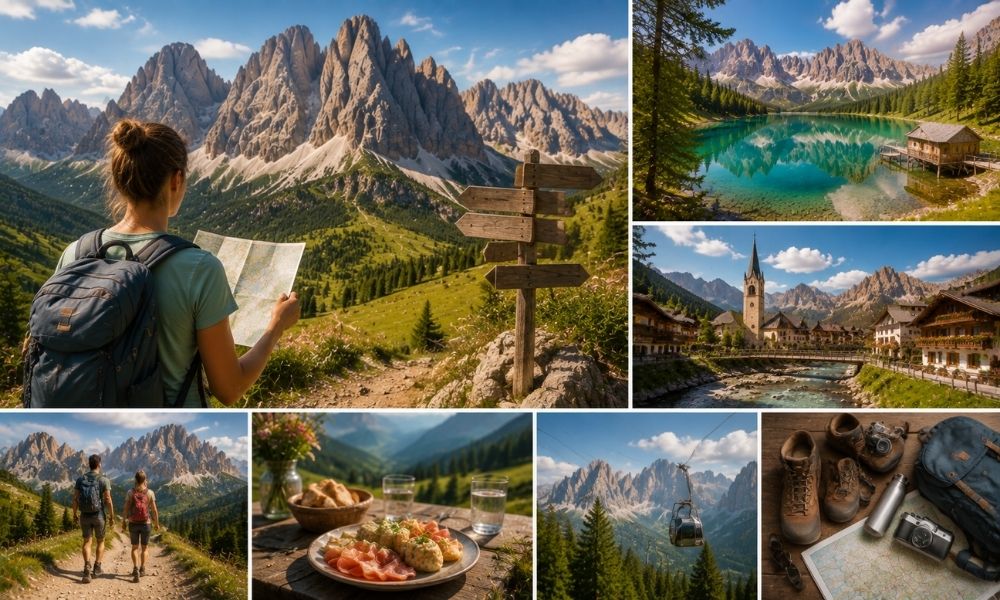
Prioritise These Experiences on a First Visit
Trying to visit every lake and viewpoint usually produces a rushed itinerary. A stronger first trip combines three different types of Dolomites experience: a mountain road, a high-altitude viewpoint and one eastern landmark area.
Drive at Least One Great Mountain Pass
Mountain passes are not simply roads between attractions in the Dolomites; they are attractions themselves.
The route around Pordoi, Sella, Gardena and Falzarego constantly changes perspective as you climb from forests into exposed alpine terrain.
Passo Pordoi is particularly memorable. Ciao Dolomites' western route climbs through 27 hairpin bends to the pass at 2,239 metres, with an optional seasonal cable car providing access toward Sass Pordoi at around 2,950 metres.
A common first-timer mistake is scheduling these roads as if they were normal highway journeys. Allow extra time for viewpoints, cyclists, traffic and the simple fact that you will want to stop.
Experience Seceda Without Making It a Photo Stop
Seceda deserves more than a quick photograph at the top station.
Once you arrive, walk away from the lift and follow the ridge far enough to appreciate how dramatically the Odle peaks rise from the surrounding meadows. Even visitors who are not serious hikers can experience an extraordinary alpine landscape with relatively little walking.
Summer demand can be high, and South Tyrol's tourism authority recommends reserving Seceda cable-car tickets online in advance during busy periods. Parking in Ortisei is also limited, making public transport or organised transport worth considering.
Give the Eastern Dolomites a Full Day
Tre Cime, Cortina, Misurina and Lago di Braies are often grouped together in first-time itineraries, but they should not be squeezed into a casual half-day drive.
Ciao Dolomites' Heart of the Dolomites tour illustrates the scale involved: its eastern loop from Bolzano covers around 280 kilometres and takes approximately eight hours, travelling across Gardena, Valparola and Falzarego before reaching Cortina and the eastern lakes.
If travelling independently, consider visiting fewer places and staying longer at each one.
Decide Whether You Actually Need a Car
A rental car provides freedom, particularly when moving between valleys, but it is no longer automatically the easiest way to reach every famous attraction.
Trains reach gateway towns rather than the high mountains themselves. From the Brenner corridor, stations such as Bolzano, Bressanone and Fortezza connect with buses and regional services toward the valleys. Public transport is particularly practical in parts of South Tyrol, where buses, regional trains and seasonal mountain transport form an integrated network.
The strongest reason not to rely entirely on a car is that access to several heavily visited places is increasingly managed.
In summer 2026, vehicle access to the Braies Valley is restricted during daytime hours between July 1 and September 15 unless visitors have qualifying reservations or permits. Tre Cime also now requires advance online reservations for vehicles using the toll road to Rifugio Auronzo, while a reservable shuttle operates from Dobbiaco during the summer season.
A private driver-guide is another useful middle ground for first-time visitors who want the flexibility of road travel without dealing with parking, passes and route planning themselves.
A Simple Three-Day Dolomites Itinerary for First-Time Visitors
If you are starting around Bolzano and want a balanced introduction, keep the route simple.
Day 1: Western Dolomites. Travel toward Lake Carezza, continue through Val di Fassa and experience the Pordoi/Sella area before returning through Val Gardena. The goal is not collecting stops but seeing how the landscape changes as you cross the major passes.
Day 2: Seceda and Val di Funes. Take the cable car from Ortisei and spend enough time walking around the Seceda ridge. Later, continue to Val di Funes for a completely different view of the Odle peaks and the valley's famous church landscapes.
Day 3: Eastern Dolomites. Make this the longest day. Cross toward Cortina, visit Misurina and experience Tre Cime or Lago di Braies depending on your interests, access arrangements and weather.
If three long sightseeing days sound exhausting, replace the third day with a slower hike around Val Gardena. The Dolomites become much more enjoyable when your itinerary includes room to stop unexpectedly.
Prepare for the Mountains, Not Just the Forecast
Conditions in a valley town can feel completely different from conditions at a cable-car summit thousands of metres higher.
Even on a warm summer trip, dress so that you can add or remove layers quickly. Your footwear should match your planned activity: trainers may be enough for paved viewpoints, but proper hiking shoes are far more comfortable once trails become rocky or wet.
For a typical summer sightseeing and light-hiking day, carry:
- A light waterproof or windproof outer layer
- Warm mid-layer even when the valley forecast looks hot
- Comfortable shoes with reliable grip
- Sun protection, including sunglasses and sunscreen
- Water and a small snack
- Offline maps or downloaded route information
- A small amount of flexibility in case a lift, road or trail changes your plans
Do not assume that a cable car removes the need to prepare for mountain conditions. It simply moves you into those conditions faster.
Common First-Time Dolomites Mistakes to Avoid
Most disappointing Dolomites trips are not caused by choosing the wrong attraction. They are caused by trying to do too much or overlooking practical details.
- Changing valleys every few hours. A shorter itinerary usually produces a better experience.
- Ignoring lift schedules. A viewpoint may technically exist year-round while the easiest way to reach it does not.
- Assuming famous attractions have unrestricted parking. Braies and Tre Cime are clear examples of why access rules should be checked before departure.
- Planning mountain roads using distance alone. Fifty kilometres through passes can feel very different from fifty kilometres on an autostrada.
- Leaving no weather flexibility. Build at least one part of your trip that can be moved to another day.
- Spending the whole visit chasing photographs. The most memorable part of the Dolomites is often the walk between viewpoints, lunch at a mountain rifugio or an unplanned stop on a pass.
FAQs
How many days should a first-time visitor spend in the Dolomites?
Three days is enough for a useful introduction. Four to five days is better if you want to combine famous viewpoints with hiking, while a week allows you to stay in both the western and eastern Dolomites.
Is Bolzano a good base for visiting the Dolomites?
Yes, particularly for the western Dolomites and travellers arriving by train. It also works well as a starting point for organised day tours into both western and eastern areas.
Can you visit the Dolomites without a car?
Yes. Trains reach gateway towns and buses connect many major valleys, while cable cars and seasonal shuttles serve mountain attractions. Choosing accommodation close to good transport connections makes a car-free trip much easier.
Which Dolomites attraction should a first-time visitor not miss?
There is no single essential attraction, but a first trip should ideally include one mountain-pass drive and one high-altitude experience such as Seceda or Tre Cime. This gives you a much better sense of the Dolomites than visiting several lakes alone.