
Spending only one day in the Dolomites creates a surprisingly difficult planning problem. The region is not one compact attraction: lakes, mountain passes, villages and viewpoints are spread across winding alpine roads, and a route that looks manageable on a map can quickly become unrealistic once parking, weather, cable-car schedules and summer access restrictions enter the picture.
The solution is not to collect as many famous names as possible. A successful Dolomites day trip follows one continuous route, gives priority to a few worthwhile stops and treats the drive itself as part of the experience.
Starting from Bolzano, one of the strongest options is a west-to-east circuit through Lake Carezza, Passo Pordoi and Cortina d'Ampezzo before continuing towards Misurina, Dobbiaco and Lake Braies. It is essentially the approach used for Ciao Dolomites' private daily tours through the Dolomites, with the most comprehensive version covering roughly 300 kilometres in about ten hours.
Here is what that kind of day could realistically look like.
Your Dolomites Day at a Glance
A well-paced full-day itinerary from Bolzano might follow this sequence:
- 8:00 AM: Leave Bolzano and travel through the Ega Valley
- Around 9:00 AM: Stop at Lake Carezza
- Late morning: Cross Val di Fassa and reach Passo Pordoi
- Early afternoon: Continue through Arabba and the high mountain passes to Cortina d'Ampezzo
- Afternoon: Visit Lake Misurina and continue towards Dobbiaco
- Late afternoon: Finish the sightseeing portion of the day at Lake Braies
- Early evening: Return to Bolzano through the Pusteria and Isarco valleys
Treat these times as a framework rather than a strict timetable. Mountain weather, traffic and how long you spend at viewpoints should determine the final rhythm of the day.
8:00 AM: Leave Bolzano Before the Mountain Roads Get Busy
An early departure matters because the first part of the day takes you from the city into increasingly narrow mountain valleys.
From Bolzano, the road enters the Ega Valley between the Rosengarten/Catinaccio and Latemar mountain groups. Instead of regarding this first stretch as transfer time, pay attention to how quickly the landscape changes. Urban surroundings give way to forest, exposed rock and steep valley walls before the route reaches the higher ground around Carezza.
Starting at around 8:00 AM also creates useful flexibility later. If you discover a viewpoint worth another 15 minutes, you can enjoy it without immediately compromising the afternoon.
Around 9:00 AM: Make Lake Carezza Your First Proper Stop
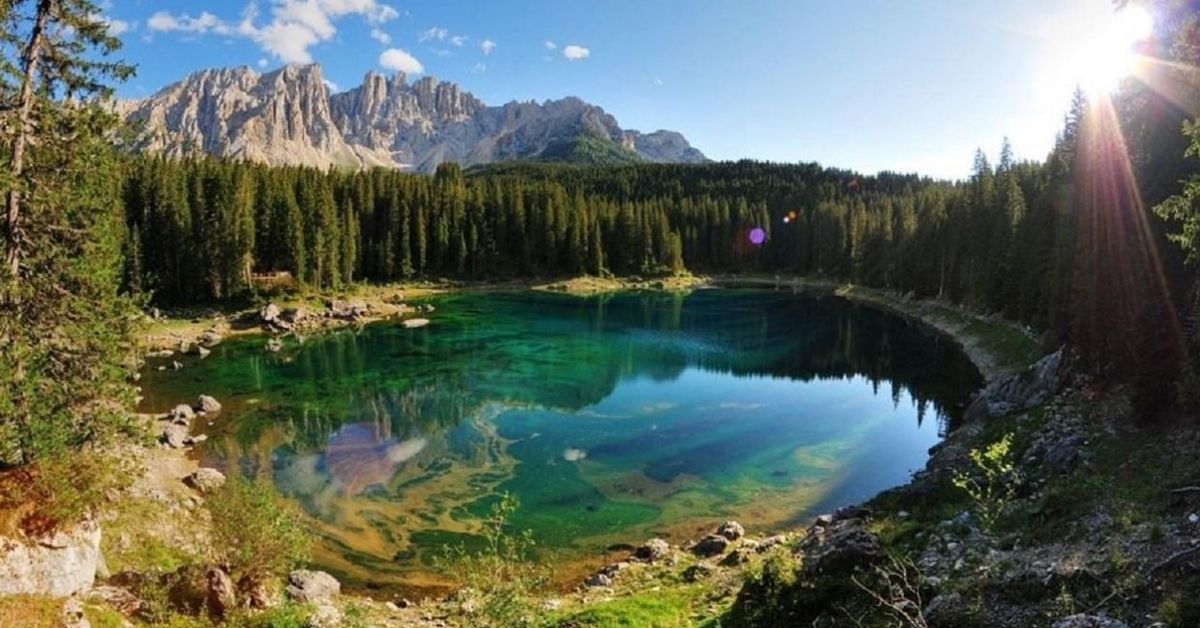
Lake Carezza works particularly well as the first major stop because it delivers an impressive Dolomites landscape without demanding a long hike.
The protected alpine lake sits beneath the Latemar massif at about 1,520 metres, and a short circular walk can be completed in roughly 20 minutes. Its appearance changes with water levels, weather and light, so photographs taken on different visits can look surprisingly different. Swimming is prohibited because the lake is protected.
Allow approximately 30–40 minutes. That is enough time to walk, enjoy the reflections and take photographs without turning a ten-hour scenic itinerary into a lake-focused morning.
The important thing is knowing when to leave. In the Dolomites, lingering at the first beautiful place is one of the easiest ways to lose the rest of the day.
Late Morning: Cross Val di Fassa and Climb to Passo Pordoi
From Lake Carezza, continue through the Costalunga Pass and into Val di Fassa. The journey becomes increasingly dramatic as the road approaches Canazei and the Sella massif.
The climb towards Passo Pordoi is one of those stretches where the road itself is the attraction. Hairpin bends gain elevation quickly until you reach the pass at 2,239 metres.
Should You Take the Sass Pordoi Cable Car?
If visibility is excellent and you would rather have one outstanding high-altitude viewpoint than several shorter roadside stops, the Sass Pordoi cable car is worth considering.
It climbs from Passo Pordoi to almost 3,000 metres. For the 2026 summer season, the Passo Pordoi–Sass Pordoi lift is scheduled to operate from May 14 to November 1, generally from 9:00 AM to 5:00 PM. Mountain operations can still be affected by weather.
The trade-off is time. A quick stop at the pass may take 20–30 minutes, while taking the cable car and properly enjoying the summit can require an hour or more once waiting time is included.
For a one-day itinerary, choose deliberately. If Sass Pordoi is your main panoramic experience, shorten one of the afternoon lake stops rather than trying to recover the time by rushing everywhere else.
Around Midday: Drive Through Arabba and the High Passes
Continue east through Arabba and towards the Falzarego area.
This section is important because it connects two different sides of the Dolomites. Instead of making another long attraction stop, use the journey to appreciate the succession of mountain groups, passes and valleys.
It is also a good part of the day for spontaneous five-minute viewpoint stops when road conditions and parking allow. Some of the most memorable Dolomites photographs are taken from places that were never intended to be the day's "main attraction."
What you should avoid is turning every pull-off into a scheduled stop. Save enough time for Cortina and the eastern lakes.
Early Afternoon: Stop in Cortina d'Ampezzo for Lunch and a Walk
After several hours dominated by mountains and passes, Cortina gives the itinerary a useful change of pace.
Rather than planning a long restaurant lunch, allow approximately an hour for a simple meal and a walk through the centre. Corso Italia and the surrounding streets give you a chance to experience an actual Dolomites town instead of seeing the region entirely through viewpoints and car windows.
This is also an ideal point to reassess the day.
If the weather is deteriorating in the high mountains, spend a little longer in Cortina. If conditions remain clear, keep lunch efficient and move on towards Misurina.
That flexibility is more valuable than following an itinerary to the exact minute.
Mid-Afternoon: See Misurina and the Tre Cime Landscape
From Cortina, continue towards Lake Misurina.
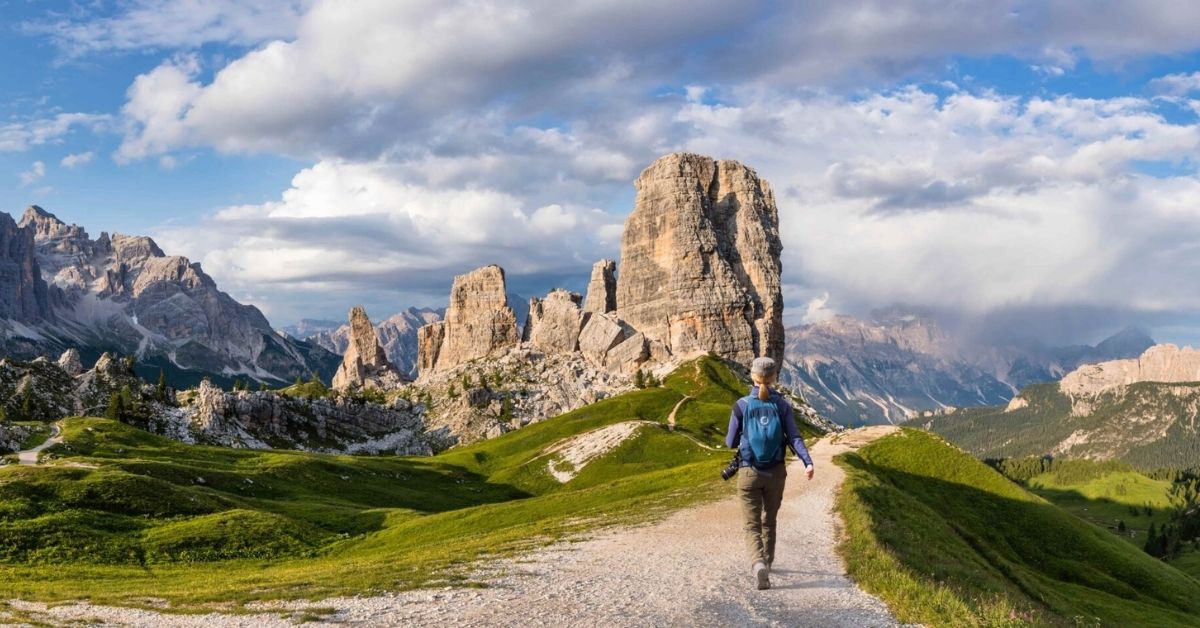
Misurina earns its place in a one-day itinerary because the scenery is immediate. You do not need a long approach hike to appreciate the surrounding peaks, and the area provides views towards some of the best-known mountains of the eastern Dolomites.
This is also where expectations around Tre Cime di Lavaredo need to be realistic.
Do Not Confuse Seeing Tre Cime With Hiking Tre Cime
A full hike around Tre Cime is an experience worth giving several hours. Trying to add that hike to Lake Carezza, Passo Pordoi, Cortina and Lake Braies in one day would turn the itinerary into a race.
If your priority is to hike Tre Cime, build the whole day around the eastern Dolomites instead.
If your priority is to see a broad cross-section of the Dolomites, enjoy the Tre Cime landscape from the Misurina area and continue.
Drivers planning to use the road towards the Rifugio Auronzo parking area should also check the current reservation system in advance. Access to the Tre Cime parking area is regulated, and availability depends partly on seasonal and weather conditions.
Later in the Afternoon: Make Lake Dobbiaco a Short Scenic Stop
Lake Dobbiaco is better treated as a pause than another major excursion on this itinerary.
A short stop gives you a quieter contrast to the dramatic high passes earlier in the day. Stretch your legs, take in the water and surrounding mountains, then continue towards Braies.
This is one of the places where good itinerary discipline pays off. Twenty relaxed minutes can add more to the day than an hour spent walking simply because you feel every stop has to be "fully explored."
Late Afternoon: Finish at Lake Braies
Lake Braies makes a natural final highlight because the route then leads back towards Bolzano through the Pusteria and Isarco valleys.
Give yourself time to walk beyond the immediate entrance area. Even without completing the full circuit, moving a short distance along the shore changes the perspective and usually produces a more satisfying experience than stopping only at the famous boathouse viewpoint.
Peak-season access requires additional planning. From July 1 to September 15, 2026, access to the Braies Valley between 9:00 AM and 4:00 PM is restricted to public transport, walking, cycling or visitors with the required online reservation or transit permit. Arriving before 9:00 AM does not guarantee parking, either.
That is exactly why a Dolomites itinerary should never depend on improvising parking at every famous attraction.
Why This Route Works Better Than a Random List of Highlights
The strength of this itinerary is not simply the number of places it includes. It is the way they connect.
The route moves continuously across the mountains rather than repeatedly returning to the same valley. You begin with the softer forest-and-lake scenery around Carezza, climb into the high western passes, reach the more urban atmosphere of Cortina and then finish among the lakes of the eastern Dolomites.
That progression also reveals why the Dolomites received UNESCO World Heritage status. The protected property is made up of nine separate mountain systems rather than one isolated landmark, which helps explain the remarkable variety encountered during a full day's drive.
A good one-day visit should give you a sense of that variety rather than simply delivering five photographs of similar viewpoints.
What You Should Not Add to This Itinerary
The biggest mistake is assuming that one more famous attraction will only require one more hour.
For example, Seceda, Val di Funes, Alpe di Siusi and a full Tre Cime hike should not simply be added to this route. Each deserves enough time to justify the detour.
Instead, decide what kind of Dolomites day you actually want.
If you want maximum scenic variety, Ciao Dolomites' Best of the Dolomites in One Day experience follows the same broad western-to-eastern idea described above. The company also offers shorter, more focused alternatives: the Great Dolomites Road concentrates on the western side, the Heart of the Dolomites focuses on Cortina and the eastern lakes, while the Seceda and Funes Valley itinerary is designed around walking and panoramic viewpoints.
The best itinerary is not necessarily the one containing the most stops. It is the one that gives enough time to the places you came to experience.
How to Adjust the Day to Match Your Travel Style
If Photography Is Your Priority
Remove one or two secondary stops.
Spend more time at Lake Carezza, choose your viewpoint carefully at Passo Pordoi and preserve extra time for Misurina or Braies. Good light and changing cloud cover matter more to photography than checking another place off a list.
If Walking Is Your Priority
Do not attempt the grand circuit.
Choose one area—Tre Cime, Seceda, Val di Funes or another hiking destination—and make the walk the centre of the day. Scenic drives and one additional stop can then complement the hike rather than compete with it.
If You Prefer a Slower Sightseeing Day
Stay in the western Dolomites.
Lake Carezza, Passo Pordoi, Sella Pass and Val Gardena already make a substantial day without travelling all the way to Cortina and Braies. Ciao Dolomites estimates its western Great Dolomites Road itinerary at approximately six hours, compared with about ten hours for the full western-and-eastern circuit.
For families or travellers who simply dislike spending most of a day in transit, that may be the better experience.
Practical Planning Can Make or Break the Day
Mountain travel rewards flexibility, but several things should be decided before departure.
Check road and lift conditions the evening before and again in the morning. Weather can be completely different at 2,000–3,000 metres than it is in Bolzano, and a viewpoint that is spectacular in clear conditions may offer very little in low clouds.
Peak-season reservations deserve particular attention. Braies currently operates summer traffic controls, while access to the Tre Cime parking area uses a booking system. Cable cars also follow seasonal operating calendars.
If you are driving yourself, build additional time into the schedule for parking and navigation. A private driver changes the nature of the day because you can spend the road sections looking at the landscape rather than watching for turns, parking spaces and approaching traffic on narrow passes.
What to Bring for a Full Day in the Dolomites
You do not need technical hiking equipment for this scenic itinerary, but mountain conditions still require sensible preparation.
- A light insulating layer and waterproof jacket: Temperatures can change quickly between Bolzano and the high passes.
- Comfortable walking shoes: Even short lake and viewpoint stops involve uneven ground.
- Water and a small snack: Useful when the day's timing changes unexpectedly.
- Sun protection: Altitude can make sun exposure stronger than it feels.
- A charged phone or camera and power bank: A full day of navigation and photography drains batteries quickly.
- A little flexibility: Probably the most useful thing you can bring. If clouds cover one viewpoint, spend your time somewhere conditions are better.
One Day Is Enough—If You Plan the Right Day
A single day cannot show you everything the Dolomites have to offer, and trying to make it do so usually produces the least satisfying trip.
What one well-designed day can provide is a remarkable introduction: Lake Carezza beneath the Latemar, the climb towards Passo Pordoi, the transition across the high mountain passes, lunch in Cortina, the Tre Cime landscape near Misurina and the calm waters of the eastern lakes before returning to Bolzano.
The important choice is where to spend your time rather than how many names you can fit into the schedule.
As popular Dolomites destinations increasingly use reservations, traffic controls and managed access to protect both local communities and the visitor experience, flexible routing will become even more valuable. A good itinerary leaves enough room to respond to weather, crowds and seasonal conditions—and still gives you time to actually look at the mountains.
FAQs
Can you see the Dolomites in one day from Bolzano?
Yes. A full scenic circuit from Bolzano can cover highlights in both the western and eastern Dolomites in roughly ten hours, although it should be treated as an overview rather than an in-depth visit to each location.
Can I visit Lake Braies and Tre Cime on the same day?
Yes, especially if you are sightseeing. However, combining Lake Braies with a full Tre Cime hike requires much more time, so a hiking-focused eastern Dolomites itinerary is usually better.
Is a car necessary for a one-day Dolomites trip?
Not necessarily. Public transport works well for individual areas, while a private driver is particularly useful when you want to connect several distant passes, lakes and towns in one day.
What is the best season for this itinerary?
Late spring through autumn provides the easiest access to high passes, trails and seasonal cable cars. Winter can still be beautiful, but the itinerary may need to change according to snow, road conditions and lift operations.